
What is PMI?
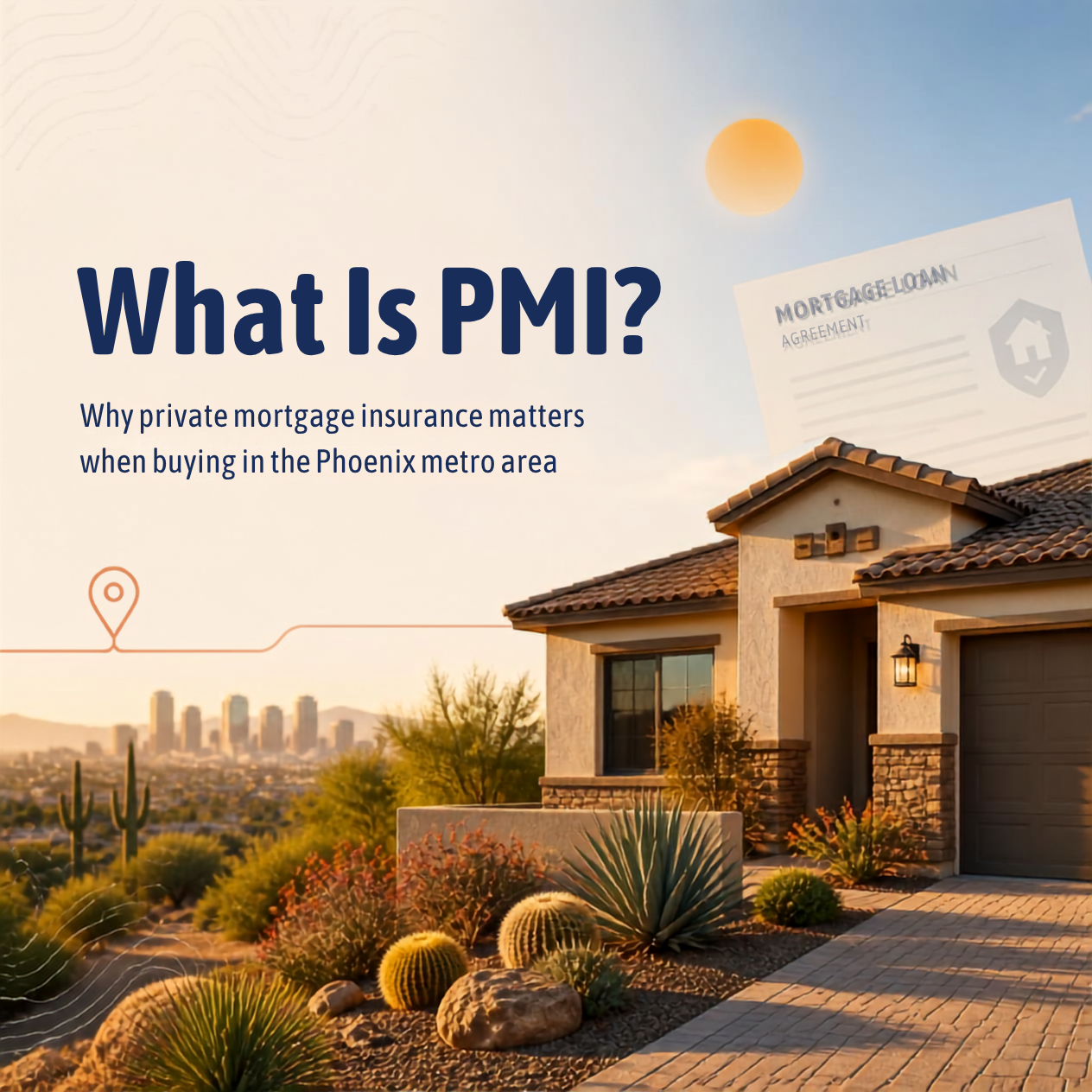
What Is PMI, and Why It's Worth Paying to Get Into a Home
If you're putting less than 20% down on a home, chances are you're going to run into PMI. I get asked about this all the time, especially from first-time buyers who hear the term and immediately think it's something to avoid. So let's talk through what it actually is, when you'll pay it, and why it's often a smart trade-off rather than a red flag.
What PMI Actually Is
PMI stands for Private Mortgage Insurance. It's insurance that protects your lender, not you, in case you default on your loan. Because a smaller down payment means the lender is taking on more risk, they require this coverage to offset that risk. It's standard practice on conventional loans, and it's not a reflection of your creditworthiness or your ability to pay. It's simply part of the math lenders use when the down payment is under 20%.
When You'll Pay It
PMI typically applies to conventional loans when your down payment is less than 20% of the purchase price. It's usually rolled into your monthly mortgage payment, so you won't get a separate bill for it. The cost varies based on your loan amount, credit score, and down payment size, but it generally runs somewhere between 0.5% and 1.5% of the loan amount per year.
The good news is that PMI isn't permanent. Once you reach 20% equity in your home, either through paying down your principal or your home's value increasing, you can request to have it removed. Lenders are also required to automatically cancel it once you hit 22% equity based on your original purchase price and payment schedule.
It's worth noting FHA loans work a little differently. Instead of PMI, they use MIP (Mortgage Insurance Premium), which has its own rules and, in many cases, doesn't go away without refinancing. That's a conversation for another post, but it's an important distinction if you're comparing loan types.
Why It's Worth Paying
Here's the thing I tell clients who are hesitant about PMI: waiting to save a full 20% down payment can cost you more in the long run than just paying PMI for a while.
Home prices in the Phoenix metro area have historically continued climbing while buyers wait and save. If you spend two or three extra years saving for that bigger down payment, you could end up paying significantly more for a comparable home by the time you're ready to buy. PMI is often the smaller cost compared to what you'd lose in appreciation and buying power by waiting on the sidelines.
There's also the equity side of things. Every month you're not paying rent and instead paying toward a mortgage, you're building equity in an asset that's yours. PMI is simply the toll for getting into that equity-building position sooner rather than later.
I've had clients get into a home with 5% or 10% down, pay PMI for a couple of years, and come out ahead of where they'd have been renting and saving. It's not the right answer for every situation, but for a lot of buyers, it's a smart way to stop waiting and start building something.
Bottom Line
PMI isn't a penalty, it's a bridge. It's what allows you to get into a home sooner without needing to save up a massive down payment first, and it goes away once you've built enough equity. If you're weighing whether to wait and save more or move forward now, it's worth running the numbers together so you can see what actually makes sense for your situation.
If you have questions about PMI, down payment options, or anything else about getting started on your home search in Gilbert, Chandler, Mesa, Scottsdale, or Queen Creek, feel free to reach out. I'm happy to walk through it with you.
Recent Posts






Making real estate fun, simple and stress-free!