
What is Wire Fraud? How to Protect Your Money During a Phoenix Real Estate Transaction
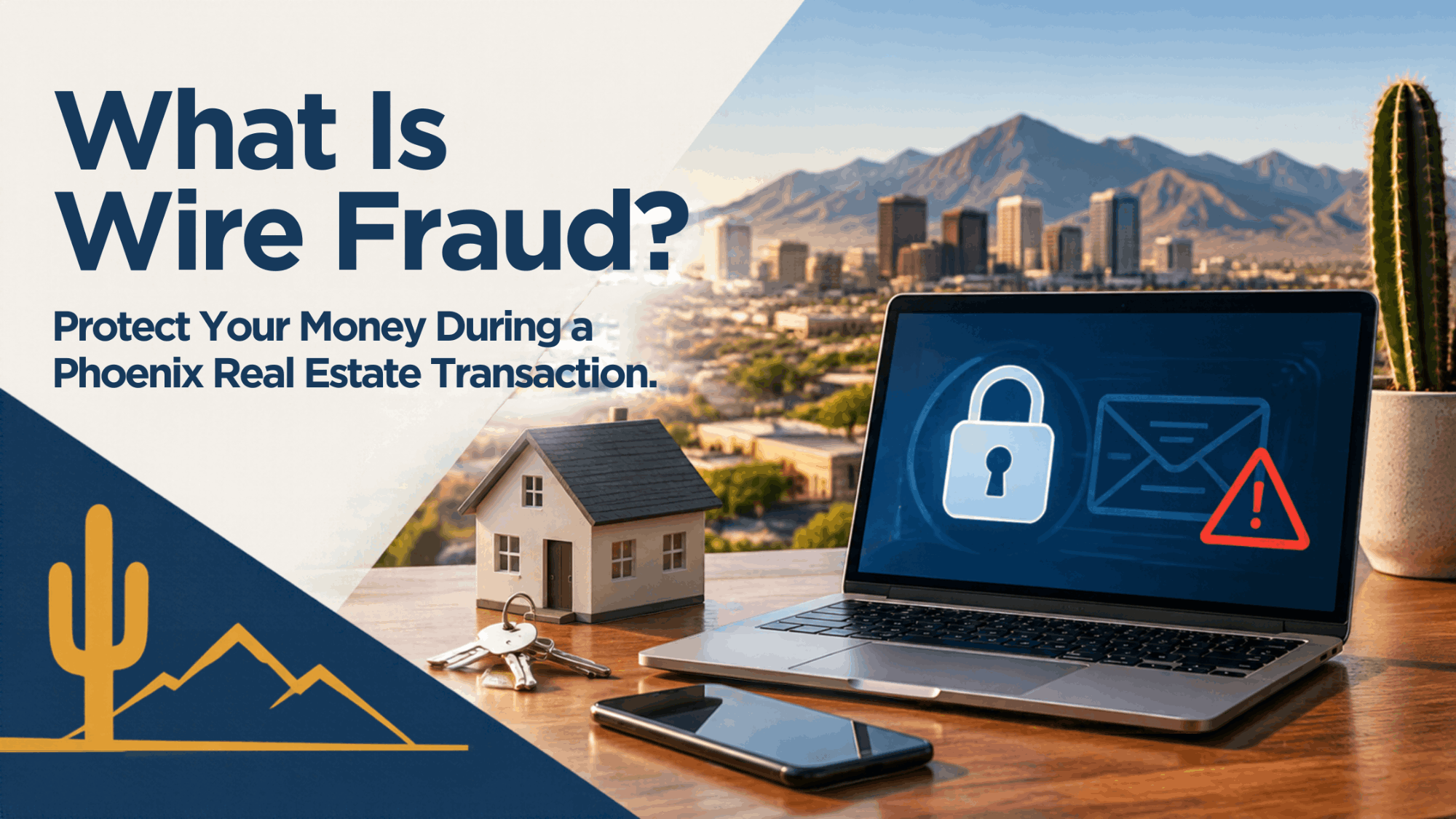
What Is Wire Fraud? How to Protect Your Money in a Phoenix Real Estate Transaction
Buying or selling a home is one of the biggest financial moves you’ll ever make, and criminals know it. In my 30+ years helping clients across the Phoenix metro area, one of the most important things I talk about with buyers and sellers today is wire fraud. It’s fast, it’s convincing, and it can wipe out a down payment in minutes.
Here’s what you need to know to stay safe.
What Is Wire Fraud in Real Estate?
Wire fraud happens when a criminal tricks you into sending money to the wrong account. In a real estate transaction, it usually works like this:
- A scammer hacks or spoofs the email account of a real estate agent, lender, title company, or escrow officer.
- They watch the conversation and wait until closing is near.
- They send an email that looks completely legitimate, often copying a real person’s name, signature, and logo, with “updated” or “corrected” wiring instructions.
- The buyer sends their down payment or closing funds to the criminal’s account instead of the real escrow account.
By the time anyone realizes what happened, the money has often been moved again, and getting it back can be very difficult.
Why Phoenix Area Buyers and Sellers Should Pay Attention
The Phoenix metro area, including Gilbert, Chandler, Mesa, Scottsdale, and Queen Creek, has an active real estate market with plenty of out-of-state buyers, relocations, and cash transactions. Large sums of money moving quickly is exactly what these criminals look for. Whether you’re buying your first home, moving from out of state, or selling and receiving proceeds, you could be a target.
Warning Signs of a Wire Fraud Attempt
Watch for these red flags:
- An email with last-minute changes to wiring instructions
- Urgent or high-pressure language, such as “wire the funds today or the closing will be delayed”
- Slightly different email addresses, such as an extra letter, a swapped character, or a different domain
- Requests to send funds to an account in a name that doesn’t match your title or escrow company
- Emails asking you to send sensitive personal or financial information over unsecured email
- Poor grammar or formatting that doesn’t match previous communication from that company
How to Stay Safe: Steps to Take
- Verify by phone before you wire. Call your title or escrow company at a phone number you already know is correct, such as the one from their official website or your initial paperwork. Never use a phone number listed in an email containing wiring instructions.
- Confirm every wire instruction, every time. Even if the instructions look identical to what you received earlier, take a few minutes to verify them verbally. Ask for the account details to be read back to you.
- Be suspicious of any change. Legitimate title and escrow companies rarely change wiring instructions midstream. If you get a “change of plans” email, stop and call.
- Don’t click links or open unexpected attachments. Phishing emails can give criminals access to your accounts or your inbox.
- Use secure communication. Ask your agent, lender, and title company about secure portals or encrypted email for sharing sensitive documents.
- Protect your own email. Use strong, unique passwords and turn on two-factor authentication. A hacked email account is how many of these scams begin.
- Wire early, not at the last minute. Rushing makes mistakes more likely. Ask your title company for instructions early in the process and verify them with plenty of time to spare.
- Tell your agent and title company about anything suspicious. If something feels off, speak up. A quick phone call can save you from a costly mistake.
What to Do If You Think You’ve Been Targeted
Time matters. If you suspect you sent money to a fraudulent account:
- Call your bank immediately and ask them to initiate a wire recall.
- Contact your title or escrow company and your real estate agent.
- File a complaint with the FBI’s Internet Crime Complaint Center at ic3.gov.
- Report it to your local police department.
The faster you act, the better the chance of recovering funds.
My Advice
Treat any email with wiring instructions with caution until you’ve verified it by phone. It takes a few minutes, and it can protect your life savings.
If you’re thinking about buying or selling a home in the Phoenix metro area, I’m here to guide you through the process from start to finish, including the steps that keep your money safe. Give me a call at (602) 763-6363 or visit onlinearizonahomes.com.
David Thomas
Realtor, HomeSmart Realty
(602) 763-6363 | david@onlinearizonahomes.com
Recent Posts








Making real estate fun, simple and stress-free!