
Why Home Sales Fall Through (and How to Protect your Deal)
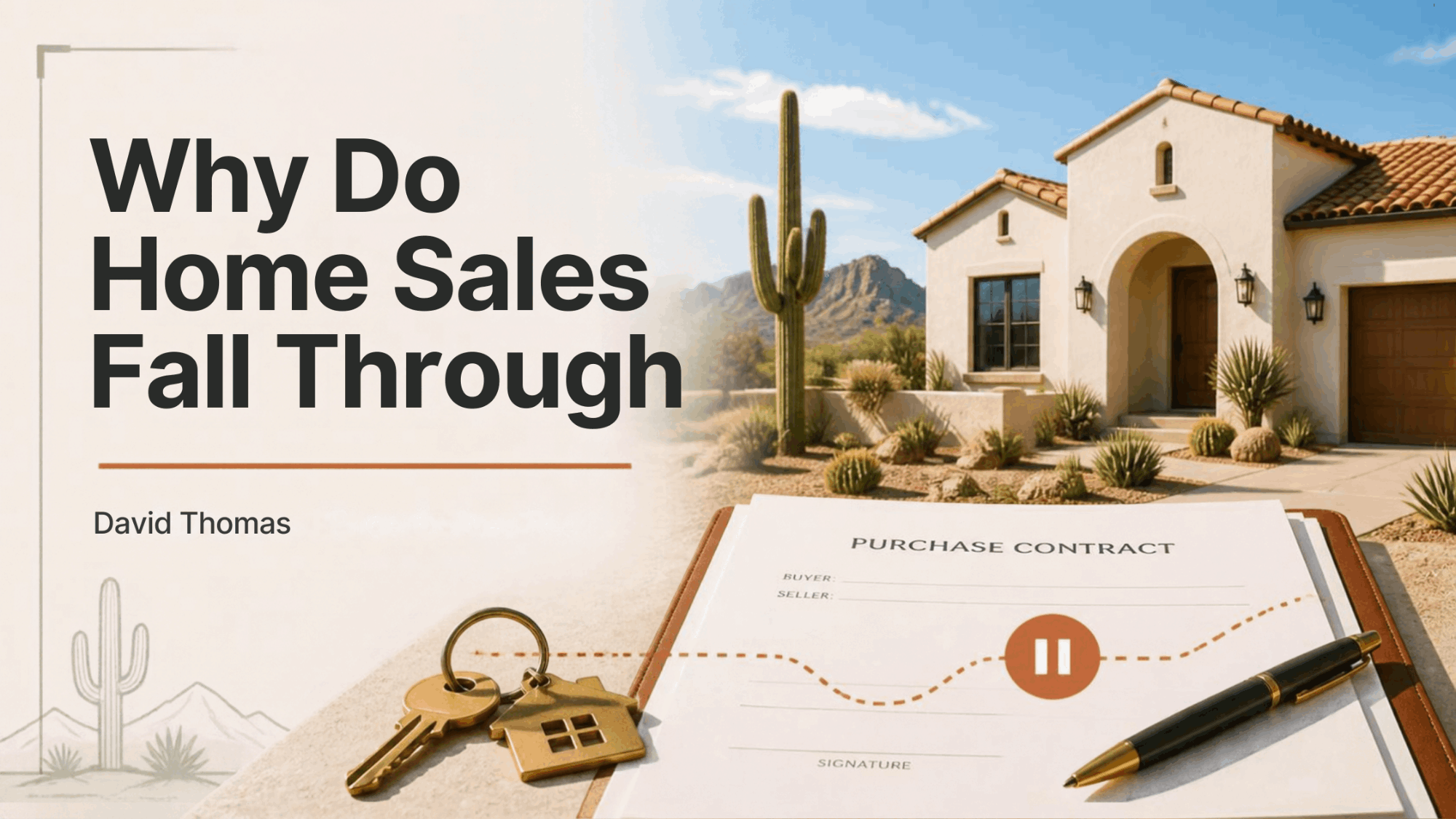
Why Home Sales Fall Through (and How to Protect Your Deal)
Getting an accepted offer feels like crossing the finish line, but it's really the start of the final stretch. In my 30+ years in the Phoenix real estate market, I've seen plenty of transactions go smoothly to closing, and I've also seen some fall apart after everyone thought the hard part was over.
The good news is that most of the reasons a sale falls through are well known, and many can be prevented or at least managed with the right preparation. Here are the most common ones I see.
- FINANCING PROBLEMS
This is one of the most common reasons a deal collapses. A buyer may be unable to secure a mortgage, or their loan approval may change before closing. A pre-approval is a great start, but it isn't a guarantee. The lender still has to verify income, assets and credit, and the loan must be fully underwritten before closing.
For buyers, the best advice I can give is to work with a reputable lender early and avoid any big financial changes while your loan is in process. For sellers, it helps to know your buyer has a strong, well-documented pre-approval.
- HOME INSPECTION ISSUES
Inspections can uncover things neither side expected. If major repairs are discovered and the buyer and seller can't agree on credits or fixes, the deal can end right there. Roofing, plumbing, electrical, HVAC and foundation concerns tend to be the biggest sticking points.
Sellers can reduce this risk by addressing known issues up front, and buyers can help by staying focused on the major concerns instead of every small cosmetic item. A little flexibility on both sides often saves the sale.
- APPRAISAL GAPS
If the home doesn't appraise for the agreed purchase price, there's an appraisal gap. Because the lender bases the loan on the appraised value, the transaction may be delayed or terminated if the financing requirements can't be met. Buyers and sellers may be able to renegotiate the price, the buyer may bring extra cash to cover the difference, or the parties may part ways.
This is why pricing matters so much. A home priced based on recent comparable sales is far more likely to appraise where it needs to.
- TITLE ISSUES
Title problems can surface late in the process. Liens, ownership disputes, unpaid taxes or errors in public records must be resolved before a sale can close. A thorough title search early on helps catch these issues while there's still time to fix them.
- PROBLEMS AT THE FINAL WALKTHROUGH
The final walkthrough is the buyer's last chance to confirm the home is in the condition agreed upon. If new damage appears, agreed-upon repairs weren't completed, or something that should stay with the home is missing, it can create last-minute friction. Most of these situations can be resolved with good communication, but they can also derail a closing if emotions run high.
- CHANGES IN THE BUYER'S FINANCIAL SITUATION
A job loss, a new car loan, a new credit card or any significant increase in debt between contract and closing can change a buyer's loan approval. Lenders often check credit and employment again right before closing, so buyers should hold off on major purchases and financial changes until the keys are in hand.
- COLD FEET AND PERSONAL CIRCUMSTANCES
Buying a home is a big decision, and sometimes buyers simply get cold feet. Unexpected personal circumstances can also come up, such as a family change or a job relocation. If contingency timelines are still active, a buyer may have the right to back out. Staying in touch and addressing concerns early can sometimes help a nervous buyer feel comfortable moving forward.
HOW TO REDUCE THE RISK OF A DEAL FALLING APART
While no transaction is ever risk-free, there are a few things that make a real difference:
- Strong communication. Keeping everyone in the loop, including agents, lenders, title and escrow, helps prevent small issues from becoming big ones.
- Pricing based on comparable sales. Realistic pricing helps protect against appraisal problems and keeps negotiations on solid ground.
- Proactive problem-solving. When an issue comes up, the best deals are the ones where everyone works toward a solution instead of digging in.
- Realistic expectations. Every home has something an inspector will find. Knowing that going in makes the process far less stressful.
THE BOTTOM LINE
A home sale can fall through for many reasons, even after an offer is accepted. But with the right preparation and an experienced agent guiding you, you can avoid many of the common pitfalls and keep your deal on track.
If you're buying or selling in the Phoenix metro area, I'd be glad to help you understand where the risks are and how to protect your transaction from contract to closing.
Tap Call Now to understand why home sales fall through, learn how to protect your real estate transaction, and connect with a trusted real estate professional to guide you through a smooth closing process.
David Thomas, HomeSmart Realty
Recent Posts







Making real estate fun, simple and stress-free!