
Inspection Period Negotiations - What and How to Do Them
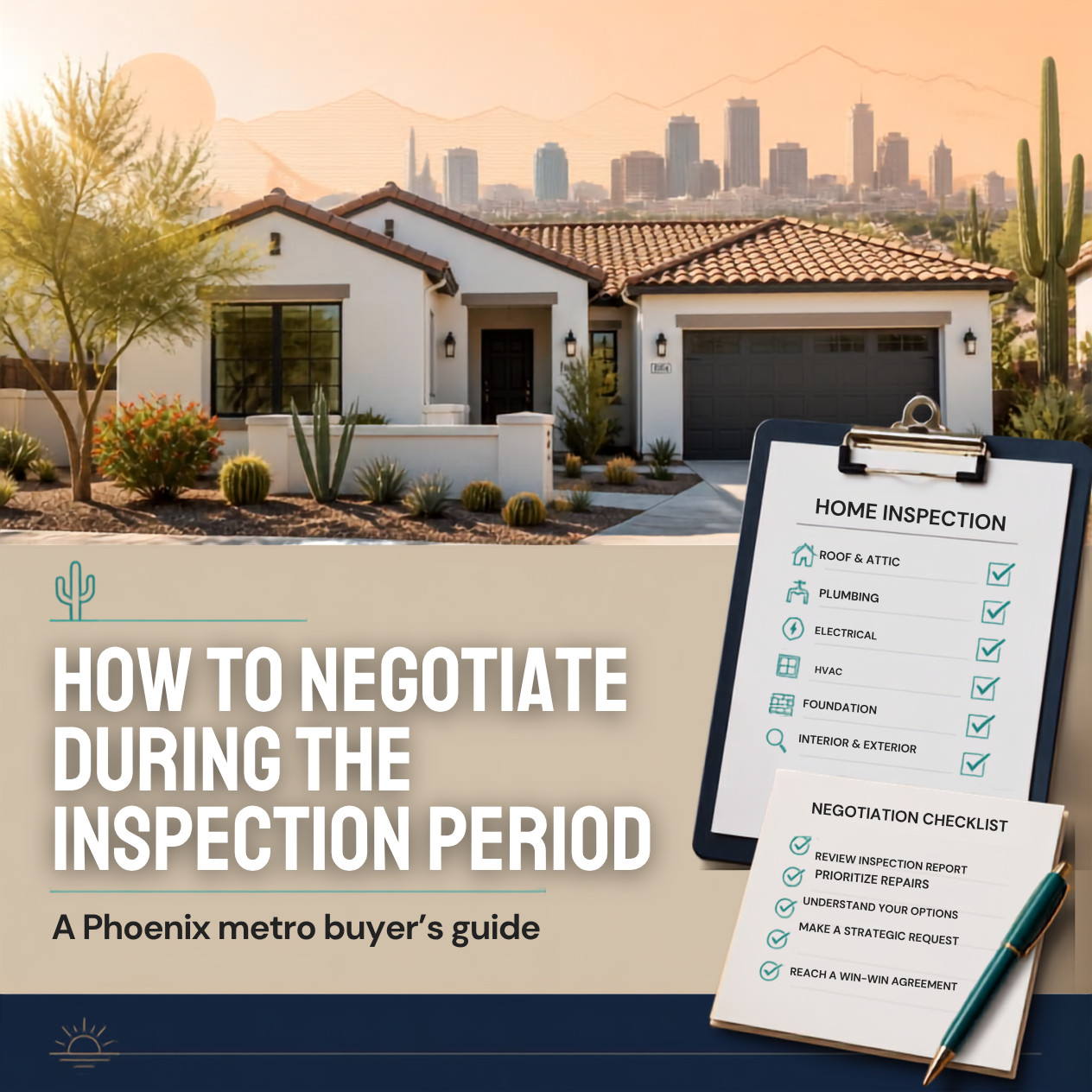
How to Negotiate During the Inspection Period Step by Step
After more than 30 years helping buyers across Gilbert, Chandler, Mesa, Scottsdale, and Queen Creek, I can tell you that the inspection period is one of the most misunderstood parts of the home buying process, especially for first-time buyers. It doesn't have to be stressful if you approach it with a clear plan. Here's the step-by-step process I walk my clients through.
1. Schedule your inspections right away
In Arizona, you typically have a 10-day inspection period once your offer is accepted, so time matters. I recommend scheduling a general home inspection and a termite inspection, as soon as possible. Depending upon the home it may be worth bringing in other specialists for a closer look.
2. Get clear on scope and pricing
For anything that looks like a significant repair, I recommend getting at least two contractor bids so you know what you're really looking at. Ask for written estimates with photos whenever possible. If the seller has already provided any reports or disclosures, take the time to verify them rather than taking them at face value.
3. Prioritize what actually matters
Not every item on an inspection report carries the same weight. I encourage my clients to sort issues into categories: health and safety, major systems like plumbing, electrical, and HVAC, structural or building envelope issues, and cosmetic items. Focus your negotiation energy on the significant categories. Cosmetic items can usually wait until after closing.
4. Decide between repairs, credits, or walking away
This decision usually comes down to your timeline, your loan type, and how much control you want over the outcome. For safety issues or anything your lender requires to be fixed before closing, repairs are often the better route. For timing concerns or when you'd rather manage the work yourself after closing, a credit toward closing costs can make more sense. And if the inspection turns up something that changes the deal entirely, your inspection period gives you the right to walk away.
5. Submit your BINSR
In Arizona, this step is done through the Buyer's Inspection Notice and Seller's Response, commonly called the BINSR. This is where you formally request repairs or credits based on what the inspections turned up. It is importan to attach the relevant inspector pages, photos, and any contractor bids. Be specific. If you're asking for a credit, state the exact dollar amount. If you're asking for repairs, specify that they be completed by a licensed contractor, and request permits where applicable along with the right to reinspect before closing.
6. Loop in your lender
Before you finalize your ask, check in with your lender about seller contribution limits based on your loan type and down payment. Conventional loans often allow sellers to contribute a percentage toward closing costs for owner-occupant buyers with lower down payments, which can often cover negotiated credits along with other closing costs.
7. Verify any completed work
If the seller agrees to make repairs, ask for receipts, warranties, and permits where required. I always recommend scheduling a reinspection before closing just to confirm the work was done properly.
8. Make your final decision
If the seller isn't willing to address the priority items and the numbers no longer work for you, your inspection period is there to protect you. You have the right to cancel within the contractual deadline if that's the right call.
The inspection period can feel overwhelming, especially the first time through, but having a clear process makes all the difference. If you're getting ready to buy in the Phoenix metro area and want someone to walk you through every step, I'm always here to help. No pressure, just reach out whenever you're ready.
Recent Posts











Making real estate fun, simple and stress-free!